logo

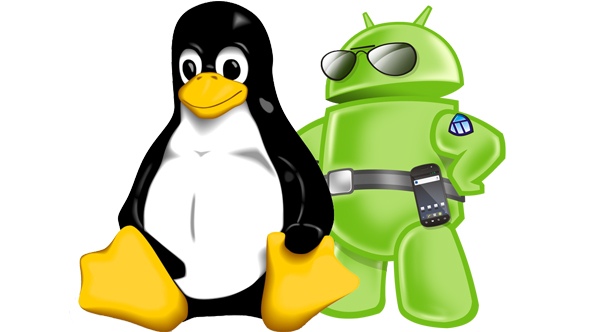
Linux kernel 3.3 released with merged Android code and more

he latest refresh of the Linux kernel, 3.3, is now available, and the second release of 2012 brings with it the long-awaited merging of code from Google's little side project. While that is particularly interesting to developers looking to boot Android or run apps on the stock Linux kernel

Samsung Galaxy S2 Android Ice Cream Sandwich 4.0.3 ROM

No doubt everyone in the Android space that doesn’t yet own an Android Ice Cream Sandwich device is waiting on getting an official update to Android 4.0, and although the Samsung galaxy S2 is approaching one year old the smartphone will gain ICS at some point this quarter, but if you don’t mind tinkering with your handset you can try ICS out right now.

A detailed look at HTC Sense 4.0 and HTC One series features

HTC One is intended to take HTC to the next level, by incorporating ground breaking technology into the One device for your music, camera, and mobile needs.

Sony Ericsson Xperia Arc HD Android 4.0 New Picture Leak

The Xperia Arc HD will be Sony’s next flagship phone with important specs both hitting a Sony device for the first time. The codenamed “Nozomi” device is said to be packing a 720p 4.3-inch display, powered by a 1.5GHz dual-core chip set , 1 GB of RAMm and running Android 4.0.

Android Development with Amethyst

Before you are ready to start work on Android development there are certain tools and SDKs that you need to install.

Showing posts with label Linux. Show all posts

Saturday, May 19, 2012

Cortex-A15 Processor

The ARM Cortex™-A15 MPCore™ processor is the highest-performance licensable processor the industry has ever seen. It delivers unprecedented processing capability, combined with low power consumption to enable compelling products in markets ranging from smartphones, tablets, mobile computing, high-end digital home, servers and wireless infrastructure. The unique combination of performance, functionality, and power-efficiency provided by the Cortex-A15 MPCore processor reinforces ARM’s clear leadership position in these high-value and high-volume application segments.

Overview

The ARM Cortex™-A15 MPCore™ processor delivers unprecedented processing capability, combined with low power consumption to enable compelling products in a wide range of new and existing ARM markets ranging from mobile computing, high-end digital home, servers and wireless infrastructure.
The Cortex-A15 MPCore processor is the latest member of the Cortex-A series of processors, ensuring full application compatibility with all of the other highly acclaimed Cortex-A processors. This enables immediate access to an established developer and software ecosystem including Android™, Adobe® Flash® Player, Java Platform Standard Edition (Java SE), JavaFX, Linux, Microsoft Windows Embedded, Symbian and Ubuntu, along with more than 700 ARM Connected Community™ members providing applications software, hardware and software development tools, middleware and SoC design services.  
The Cortex-A15 MPCore processor has an out-of-order superscalar pipeline with a tightly-coupled low-latency level-2 cache which can be up to 4MB in size. Additional improvements in floating point and NEON™ media performance result in devices that deliver the next-generation user experience for consumers as well as high-performance computation for web infrastructure applications. 
It is expected that mobile configurations of the Cortex-A15 MPCore processor will deliver over five times the performance of today’s advanced smartphones. In advanced infrastructure applications, the Cortex-A15 running at up to 2.5GHz will enable highly scalable solutions within constantly shrinking energy, thermal and cost budgets

Applications:

  • Advanced Smartphones
  • Mobile Computing
  • High-end Digital Home Entertainment
  • Wireless Infrastructure
  • Low-power Servers
The growing complexity of the Web2.0 centric devices is creating the requirement for devices to support multiple software personalities and combine disparate functionality. For this reason the Cortex-A15 MPCore processor introduces new technology from ARM that enables efficient handling of the complex software environments including full hardware virtualization, Large Physical Address Extensions (LPAE) addressing up to 1TB of memory as well as error correction capability for fault-tolerance and soft-fault recovery.
The Cortex-A15 MPCore processor is the first ARM processor to incorporate highly efficient hardware support for data management and arbitration, enabling multiple software environments and their applications to simultaneously access the system capabilities. This enables the realization of devices that are robust, with virtual environments that are isolated from each other.

By ARM

Tuesday, May 8, 2012

Open source Linux tablet showcases KDE Plasma Active technology

Members of the KDE Plasma Active community announced an open source tablet platform that runs the mobile-oriented version of KDE's Plasma UI layer on a MeeGo Linux-based "Mer" operating system. The seven-inch "Spark" tablet features a 1GHz AMLogic ARM Cortex-A9 processor with a Mali-400 GPU, offers 512MB of RAM, 4GB of internal storage, an SD slot, and a projected price of about 200 Euros ($262).

The Spark was announced with fairly minimal detail by KDE Plasma Active team member Aaron Seigo -- who has been on loan from the newly open source Qt Development Framework project to work on KDE Plasma Active. The latter is the KDE community's touch-friendly, mobile device version of the KDE desktop environment. (Long the leading competitor to GNOME on Linux desktops, KDE was upgraded last week version 4.8.)

 KDE Plasma Active 2
Like Michael Arrington's ill-fated CrunchPad, -- eventually reborn as Fusion Garage's commercial JooJoo tablet, the forerunner of the Grid-10 -- the Spark is billed as an entirely independent, open source Linux tablet platform. In his blog announcement, Seigo notes that "There's no walled garden to get locked into or which can be taken away."
This is an apparent reference to Amazon.com, which has been earning the ire of the open source community over its locked-down version of Android within the Kindle Fire tablet. (Flurry just released a report claiming the Fire has already eclipsed the entire installed base of the Samsung Galaxy Tab.)
Like the Kindle Fire, the Spark is a seven-inch capacitive tablet running on a Cortex-A9 processor. However, instead of a dual-core processor, the Spark offers Amlogic's single-core AML8726-M. The 1GHz system on chip (SoC) includes a Mali-400 graphics processing unit (GPU) and full 1080p video decoding, as detailed on this Amlogic AML8726-M product page.
Additional Spark features include 512MB of RAM, 4GB of internal storage, and microSD expansion, according to Seigo. In addition, the image shown above appears to indicate an HDMI port and dual mini-USB host ports. No manufacturer for the device was listed.
KDE Plasma Active 2 The hardware is secondary, however, to Spark's main focus: showcasing KDE Plasma Active. Intended as a fast embedded UX (user experience) platform with minimal memory requirements, KDE Plasma Active is designed for tablets, smartphones, and other touch-enabled devices such as set-top boxes, smart TVs, home automation equipment, or in-vehicle infotainment (IVI), says the project. 
                                                                 Spark tablet
The stack is notable for featuring an interface that adapts as users change KDE Activities, says the project. Additional features are said to include: a Peek&Launch bar to select applications or switch between them; touch-enabled apps and widgets; and a "Share-Like-Connect" function that "molds your computer to your preferences."
The KDE Plasma Active project is a collaboration between the KDE community, as well as development firm Basyskom and Open-slx GmbH. As noted, Qt, whose development framework underlies the Spark platform, is also a contributor to the Spark tablet effort.
MeeGo spin-off Mer involved in Spark project
Also collaborating on the Spark project is the Mer project -- a fork of the fading MeeGo project that was announced in October as an alternative to the MeeGo-based, Samsung-backed Tizen project. KDE Plasma Active runs on a foundation of either Mer, MeeGo, or Open-slx' Balsam Linux Professional 12.1.
Compared to Tizen, which Samsung says it plans to eventually merge with its Bada operating system, Mer appears to be a more independent, community-driven effort. Like Tizen, Mer adds a strong HTML5 component, but unlike Tizen, also retains the Qt framework. The Mer project says it plans to collaborate and share code with the Tizen project.
Seigo also notes that the Spark project is establishing partnerships with the KDE-backed OwnCloud hosting services, as well as two other KDE-related groupware efforts that will assist in "deployment support": Kolab and Kontact Touch. Seigo goes on to note there will be "exciting Qt/QML add-on apps for download," referring to the Javascript-based QML (Qt Meta-Object-Language), which is also incorporated in Mer.
In addition, the Spark tablet will offer "Free Culture artifacts," including digital books from Project Gutenberg, as well as contents and apps for purchase, writes Seigo.
Availability
The Spark tablet will ship soon for about 200 Euros (as of this moment, about $262), says Seigo, but more is expected to be revealed Jan. 31 on the same Aseigo blog where the Spark was announced. 


                                                                                                               Source by linuxfordevices.com


Using Android for Embedded Systems

Android has gained an enviable market share in the mobile space and is gaining momentum in the tablet market space as well.
From the time Android was bought by Google in 2005, the Open Handset Alliance was announced in 2007, the first Android Smart Phone (T-Mobile G1) in 2008 followed by the Android Market the same year, Android has been making steady progress in the mobile space and has captured the imagination of the mobile user.
In 2011 Google Android made its first major/official deviation from the mobile only approach by coming out with Honeycomb (Android 3.0) that was custom made for the tablet devices. It was an image makeover of sorts. The buzz that Android could potentially come out of its mobile-only approach move on to dominate other verticals in the embedded domain gained more noise and credibility with Google’s foray into the tablet.
As system integrators and product development partners of various product development companies, we at e-con Systems (www.e-consystems.com) face questions from OEMs/Product Companiesabout the possibility of using Android on their next embedded product. There is a consistent effort inside e-con Systems to follow, study, experiment new technologies like Android and consolidate the knowledge gathered to answer such questions from our customers. We would be sharing this knowledge and our views on the various questions regarding usage of Android for non-mobile embedded systems through this Android Blog.
In the first blog of this series we are discussing, “What are the possible areas Android could move into and why we should track it”

Understanding Android and “Google  Android”

“Google Android” – Yes, Google Android is different from “Android”. Though Android is open source and is under GPL2 and Apache license, without the backing of Google it would have never become what it is today. We are free to use the Android source code in our products (of course abiding by the respective licenses it requires us to follow) but the most attractive features of Android like the Android Market, YouTube, Mail App, Maps and search integration come with the “blessing” of Google.
So if you are a product OEM then you have to get in touch with Google and discuss the licensing of the Google services and pass the Compatibility Test Suite to gain access to the Google goodies in your device. Well this is not as straight forward as it sounds and all of you who had made products would appreciate the “effort” involved in speaking with big companies like Google and the volume that is required to have them take their time and work on our case.
So you can use the Google Trademark and other goodies only with the permission from Google. You can use the Android source code and build your own device and sell it, but cannot use the Google services, trademark, etc. Google does not guarantee anything on the source code and they are all available as is under GPL2 (partly) and Apache (partly)
That’s the difference between “Android” and “Google Android”

Google’s Android Strategy and why we should closely monitor it

Having known about the Google Android complexities, there are two different strategies that you can follow as a product developer, considering to use Android for your next product (Note: We are discussing only non-mobile/tablet devices).
  1. Get Google’s “blessing” for the development of your next product (Of course you should have a good product and good volume to start with) and get the support along with Google services, trademark, etc.
  2. Develop the product from the Android open source and “invest” in developing any missing chunk that is necessary to make your product.
Either of these 2 strategies (though opposite in nature) requires us to follow Google’s Android direction closely. We are in need to know how Google is planning to extend Android to non-mobile devices.
In the first strategy, if we need to get Google’s nod for our product, the product vertical should be in the roadmap of Google at some point. If we are not, there is a high possibility that Google may not be ready to support our product idea with Android. You can find examples of this later in the blog..
In the second strategy, if you are going to invest your money to create something new with Android for your next device, you should be aware of Google’s plan as you don’t want them to come your way with their guns blazing and make a void of your investment. For e.g., imagine that you had spent a year or so developing a Tablet friendly version with Android 2.2 and you were planning a release on May 2011. BOOM !! Google comes out with Honeycomb which would be widely accepted because of obvious reasons and kills your tablet optimized Android.
So it pays to understand what Google is planning with Android and guess its direction. That’s just what we did and we are presenting that here. Our approach would be to take a market segment or a particular type of product and analyze Google’s plan for that market. Also we would suggest what approach can be taken if you are considering to build a device for that market and want to use Android.

Embedded Systems – Verticals and Markets

Before we go into Google’s Android Strategy in detail, let’s take up some time to identify the various embedded systems verticals. Each vertical would have a market, requirements, sales strategy and revenue on its own. The pictorial representation below shows the various embedded verticals and the categories them into broad areas like Communication, Consumer, Industrial & Mission Critical.
 Figure 1: Embedded Systems Verticals
There is a thin line of difference between some of these differentiations. So there is a scope for debate as to what would fall under what (and that’s how the embedded space has grown in the last 10 years). Mobile Internet Devices (MIDs) and Personal Media Players (PMP) are slowly merging into the tablet and the smart phone. We may see no more PMPs and MIDS coming out in some time. The embedded space is pacing so fast that product verticals get created and killed in no time.
I would use the verticals indicated above to discuss Android’s emergence into each one of them.
First let’s discount the areas where Android is not going to be used either by Google or by any other 3rd Party. Most of the devices in the Communications side like the routers, firewalls, switches are going to be off limits for Android. Together with these devices, any HEADLESS device may not require Android in the first place. Most headless devices run Linux, Windows CE or VxWorks. So we would not discuss about these devices any more in this series.

 Figure 2:No Android for these devices
Secondly let us consider the area where Android is already prevalent with some devices and may spread with minimum changes and fuss to other devices in the market. Consumer Electronics/Devicesis the next vertical/segment where we are going to analyze Android’s influence. My next blog in the series would start addressing that segment.

Thursday, March 29, 2012

Kernel of Android


Android devices use the Linux kernel, but it's not the exact same kernel other Linux-based operating systems use.  There's a lot of Android specific code built in, and Google's Android kernel maintainers have their work cut out for them.  OEMs have to contribute as well, because they need to develop hardware drivers for the parts they're using for the kernel version they're using.  This is why it takes a while for independent Android developers and hackers to port new versions to older devices and get everything working.  Drivers written to work with the Gingerbread kernel on a phone won't necessarily work with the Ice Cream Sandwich kernel.  And that's important, because one of the kernel's main functions is to control the hardware.  It's a whole lot of source code, with more options while building it than you can imagine, but in the end it's just the intermediary between the hardware and the software.

When software needs the hardware to do anything, it sends a request to the kernel.  And when we say anything, we mean anything.  From the brightness of the screen, to the volume level, to initiating a call through the radio, even what's drawn on the display is ultimately controlled by the kernel.  For example -- when you tap the search button on your phone, you tell the software to open the search application.  What happens is that you touched a certain point on the digitizer, which tells the software that you've touched the screen at those coordinates.  The software knows that when that particular spot is touched, the search dialog is supposed to open.  The kernel is what tells the digitizer to look (or listen, events are "listened" for) for touches, helps figure out where you touched, and tells the system you touched it.  In turn, when the system receives a touch event at a specific point from the kernel (through the driver) it knows what to draw on your screen.  Both the hardware and the software communicate both ways with the kernel, and that's how your phone knows when to do something.  Input from one side is sent as output to the other, whether it's you playing Angry Birds, or connecting to your car's Bluetooth.  

It sounds complicated, and it is.  But it's also pretty standard computer logic -- there's an action of some sort generated for every event.  Without the kernel to accept and send information, developers would have to write code for every single event for every single piece of hardware in your device.  With the kernel, all they have to do is communicate with it through the Android system API's, and hardware developers only have to make the device hardware communicate with the kernel.  The good thing is that you don't need to know exactly how or why the kernel does what it does, just understanding that it's the go-between from software to hardware gives you a pretty good grasp of what's happening under the glass.  Sort of gives a whole new outlook towards those fellows who stay up all night to work on kernels for your phone, doesn't it?